


Caminito del Rey — day trip from Malaga
- travel
- caminito-del-rey
- andalusia
- malaga
- day-trip
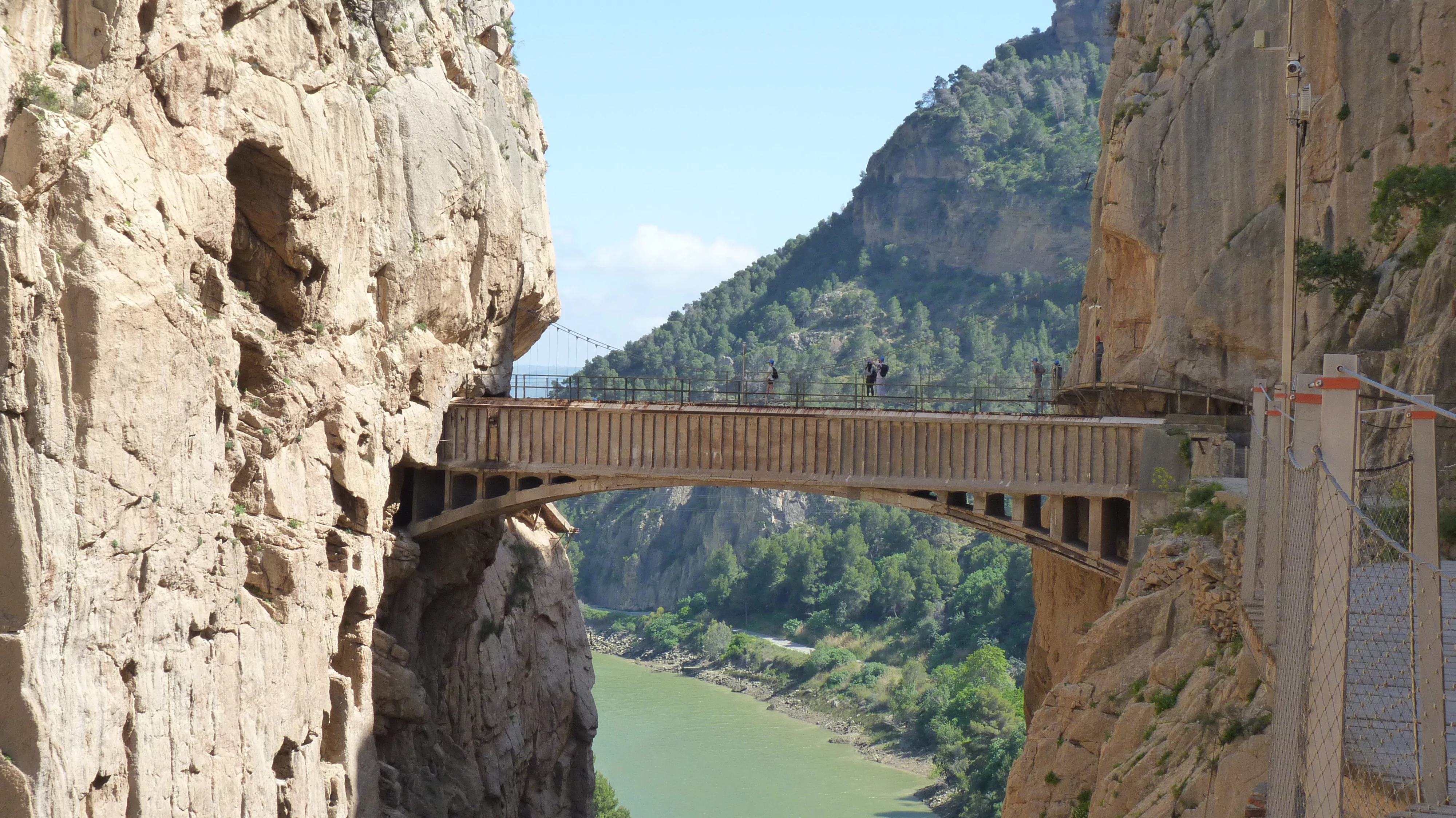
Caminito del Rey is a trail through the Guadalhorce gorge in Spain, near Malaga. It was once among the most dangerous in Europe; today it is fully restored and safe for visitors. We did it as a day trip from Malaga during our spring 2026 stay in Andalusia.
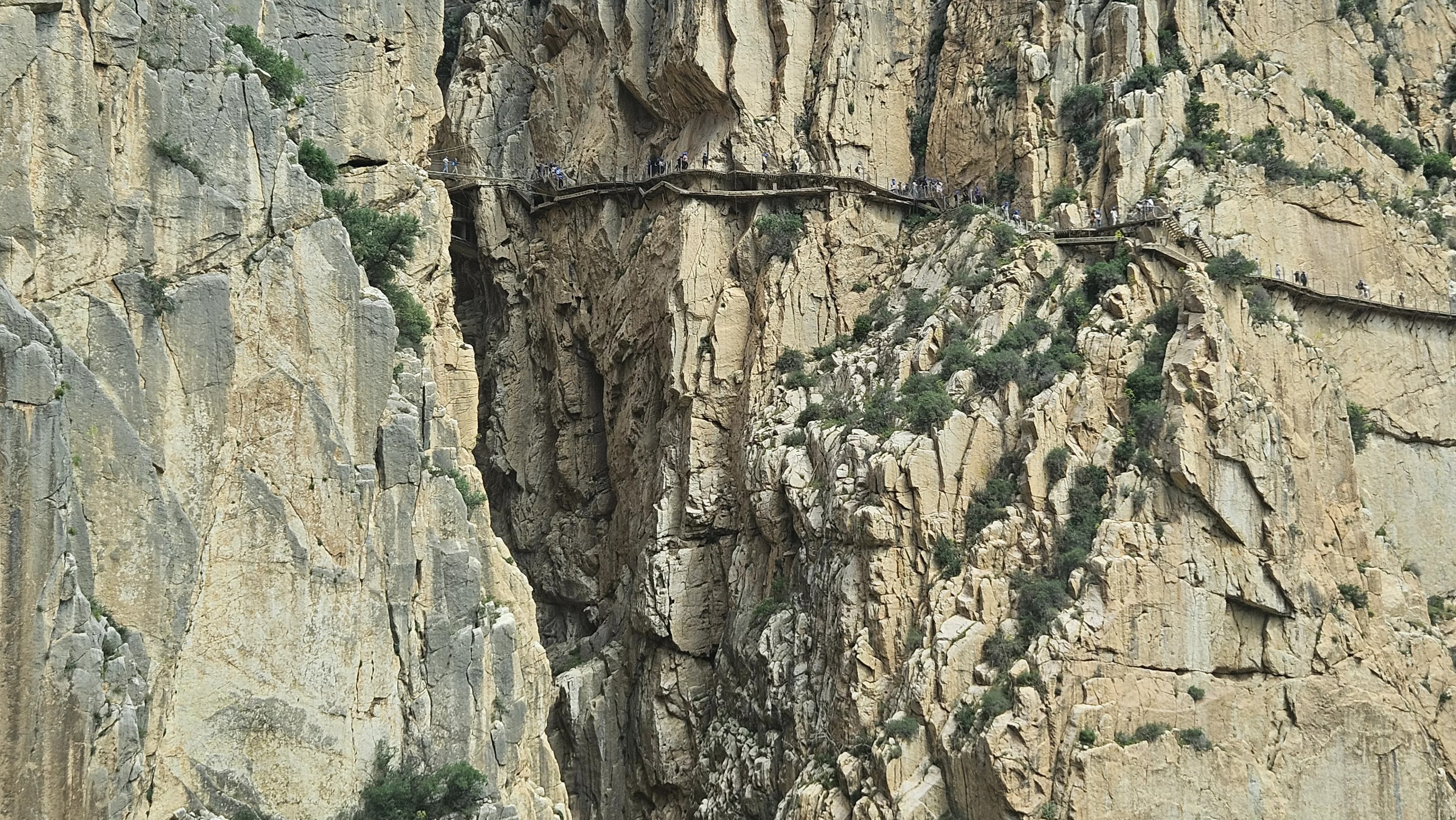
View of Caminito del Rey from the bus
Getting there
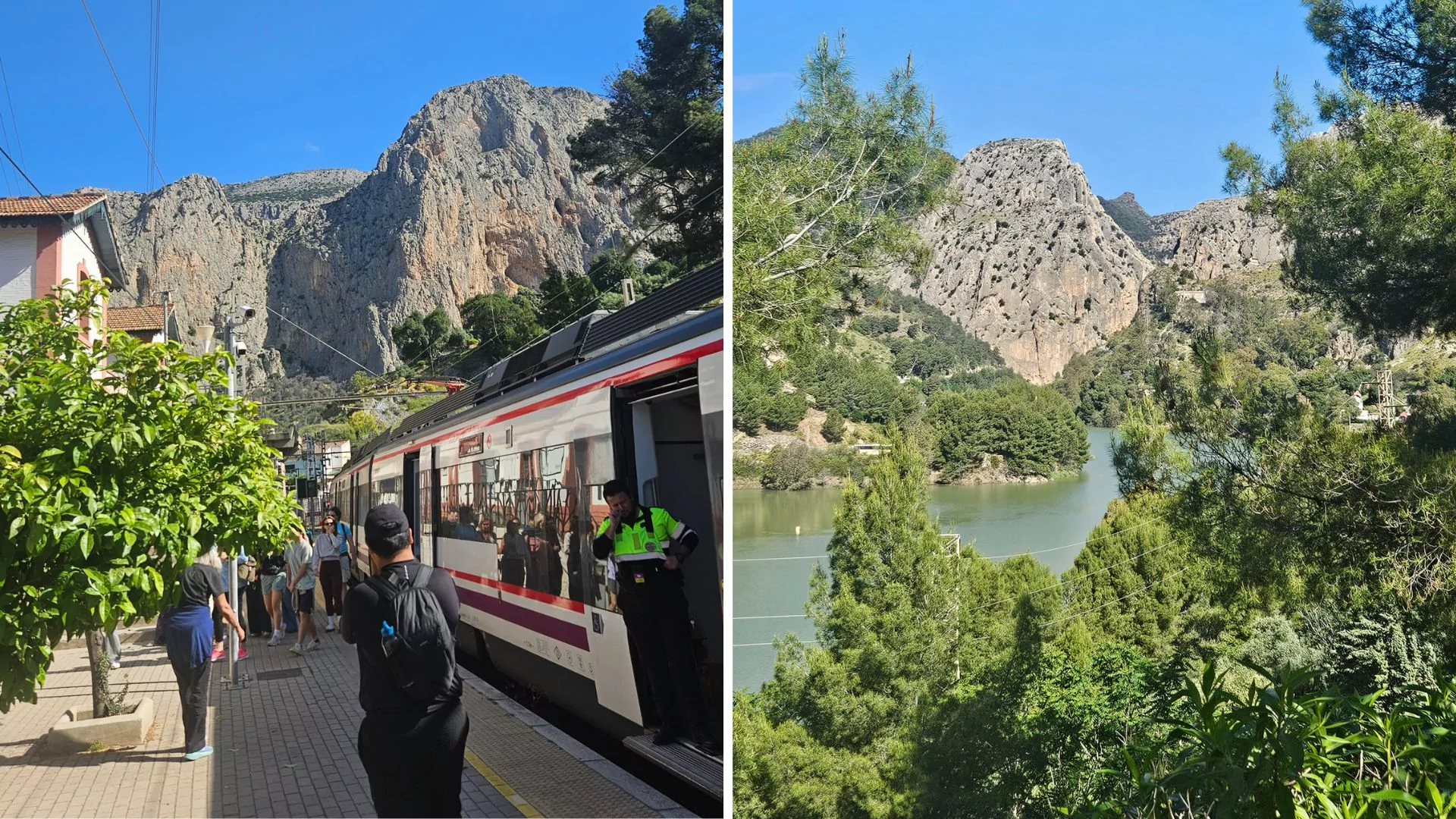
From Malaga we travelled by train from Maria Zambrano station to nearby El Chorro. The ride takes about an hour, and a return ticket costs 7 euros. At the station in El Chorro there is a café, as well as a stop for the shuttle bus that goes to the trail starting point. Worth noting: coffee at the café was 1.20 euros, and we stopped there both before and after the walk. The bus ride costs 2.50 euros for the whole day, takes under half an hour, and we only used it once. We bought the bus ticket at the counter next to the station. It is important to ride three stops to get closest to the starting point. The first stop is a car park, so if you rent a car instead of taking the train, you can drive to that parking area.
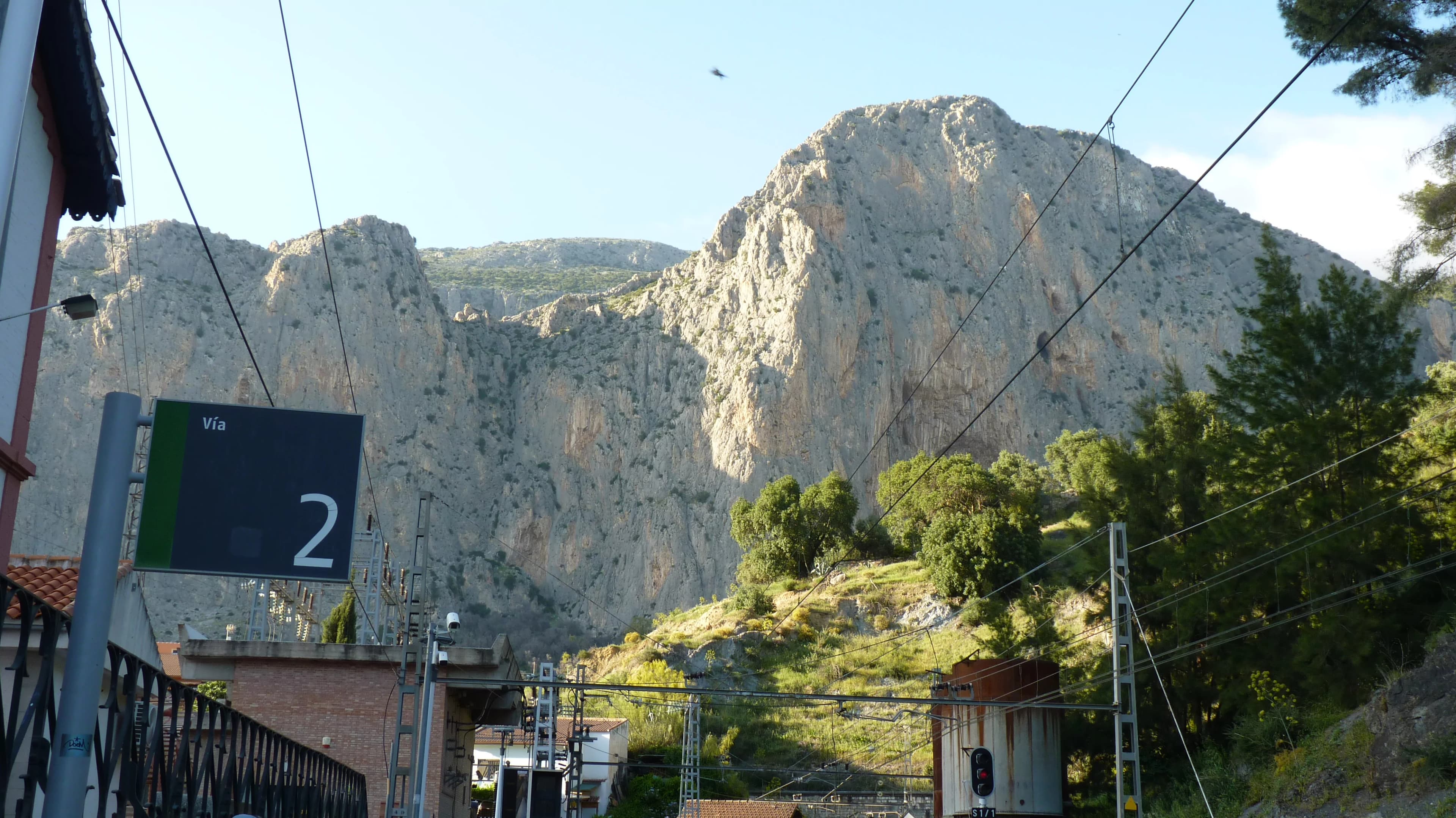
El Chorro — station
The trail has an official website where you can buy entry tickets for 10 euros, but they sell out months in advance. The best option is to book a well-rated guided tour through GetYourGuide or similar sites. We did that about a month ahead; the price was 30 euros. That includes an English-speaking guide, headphones, and a safety helmet. The booking comes with extra instructions by email, much like this blog post.
History of the place
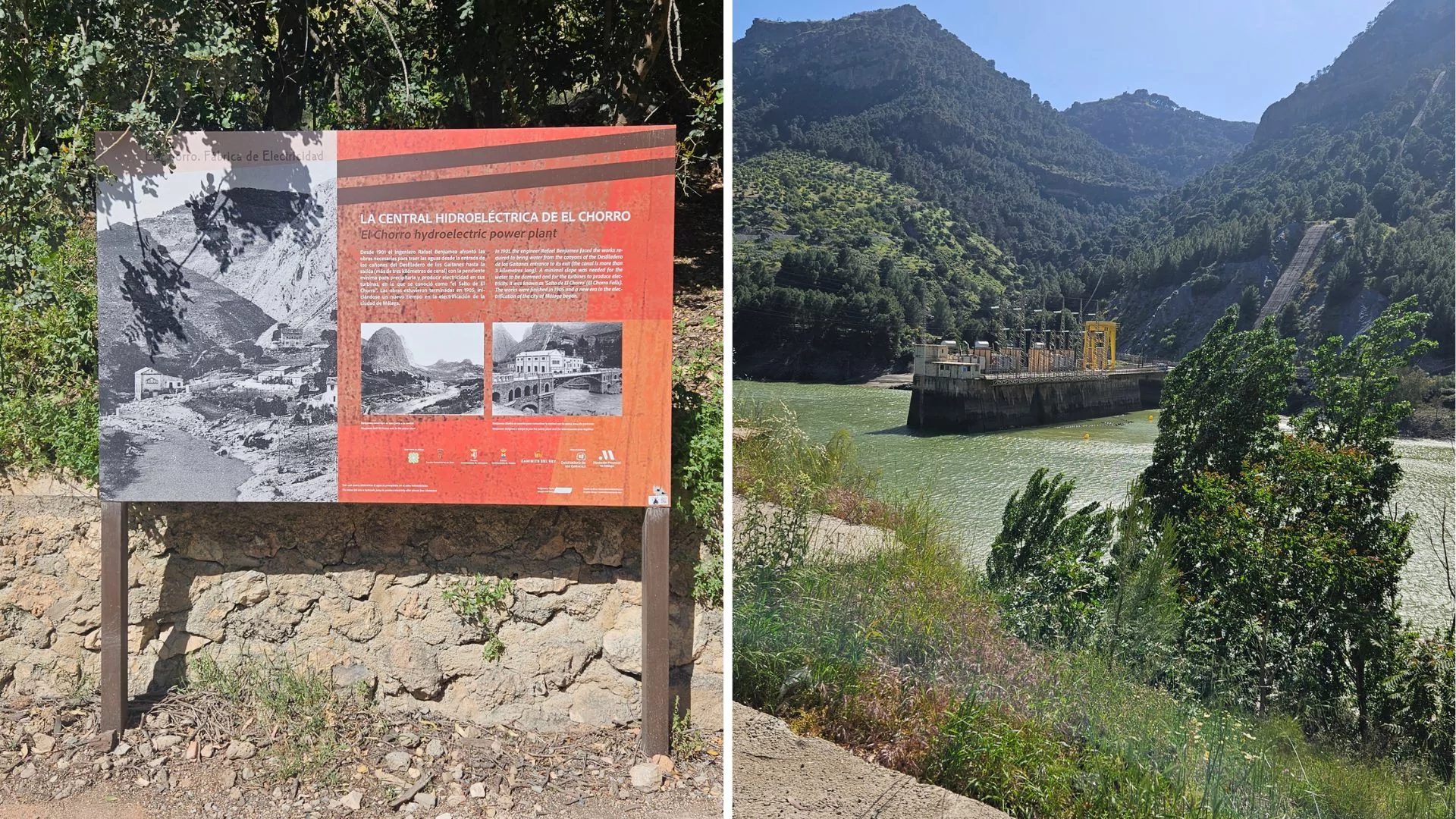
The story of this trail began in 1901, when engineer Rafael from Seville arrived to harness the water for a hydroelectric plant. The main purpose of the path was to give workers and operators at the El Chorro plant a way through the gorge. Caminito del Rey means the king’s little path; it was named after King Alfonso XIII, who came for the opening of the local dam in 1921. In general, the old section of the trail did not have ideal safety measures, and over time it fell into worse and worse disrepair. In the early 21st century several fatal accidents led to its complete closure. Only about ten years ago was the trail restored and opened to tourists.
The trail
The bus we already mentioned takes you to the lake and El Kiosko restaurant, which is a good landmark. We found a large crowd of people getting ready for the trail. This lakeside area is lovely in its own right — good for a walk and with decent spots for a picnic. You can come here without paying to walk the paid trail, especially if you have young children who are not allowed on the path. It is best to arrive early so you can spend some time there; we made it in time because our guided walk started in the afternoon.
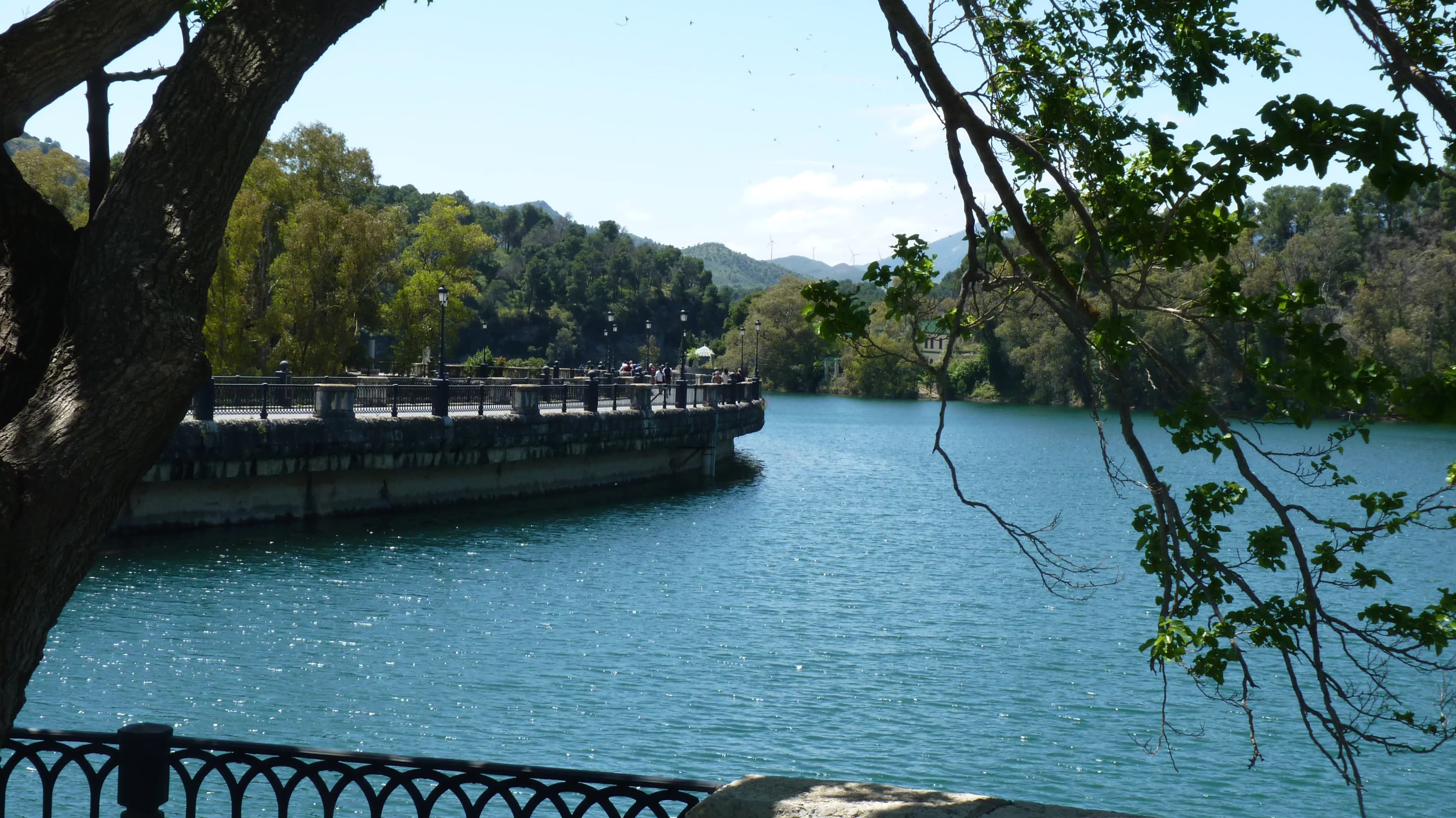
Lake by Caminito del Rey
After our break and walk by the lake, it was time to head to the starting point. Next to El Kiosko there is a tunnel you pass through, then 1.5 km on foot towards the northern trail entrance (Acceso Norte). That is where you pick up helmets and audio headsets.
While we were waiting to start, I noticed some people from Italy looking at me and laughing. I assume my shirt caught their eye — an Edin Džeko Bosnia national team jersey. That was shortly after the play-off in which BiH beat Italy and qualified for the World Cup.
Once we had our helmets and had adjusted the headsets, our guide took over. He gave us a historical introduction first, then we set off along the trail. The route is circular, about 7–8 km long, and the walk usually takes around 2 hours at an easy pace. It is not physically demanding, but you need reliable footwear and must follow the rules. Once you start, there is no turning back — you have to cross the famous bridge at the end, as the guides point out. Most of the trail is a narrow passage along the rock face with a safety railing. The views are incredible, both down to the river and across the surrounding hills. Rather than describing the path, it is best to look at the photos — and even photos cannot capture what it feels like in person.
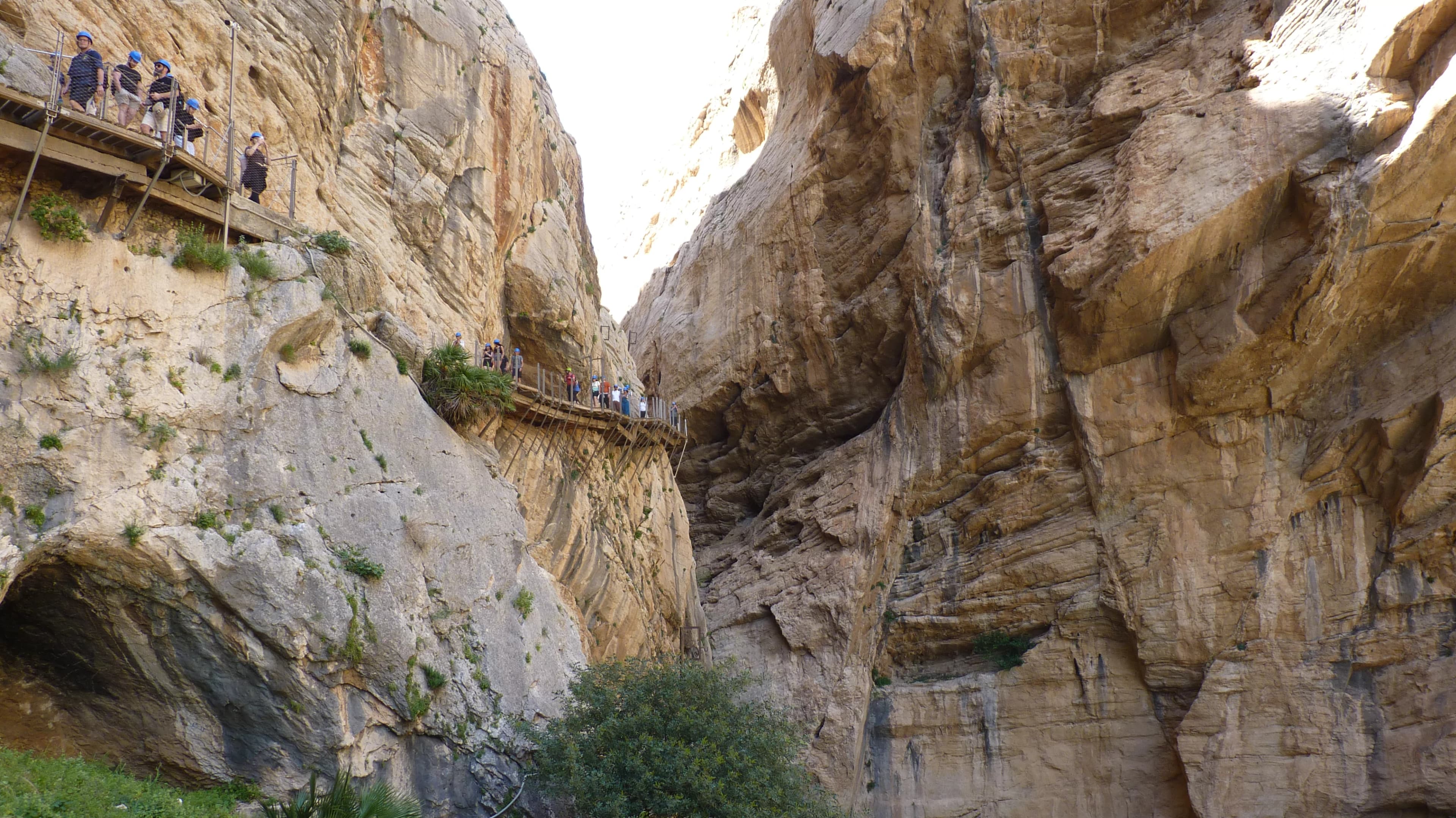
View from the Caminito del Rey trail
Along the walk we stopped at wider sections where the guide shared a few interesting facts. Some of what I remember:
- Carob — In these parts a tree grows whose fruit was once used as a measure of weight and is still associated with gold today.
- Oleander — Besides carob, oleander grows here too. In summer it turns purple, but it is poisonous. People planted it along paths to keep animals away that could smell the toxin.
- Ammonites — A fossil in the rock, proof that this area was once under the ocean.
- Old houses — Walking the trail you can see old houses in quite a ruined state. Workers at the power plant raised large families with many children here; the Caminito became their home. Today several well-known descendants trace their roots to those families.
There was more, but I did not retain it because I was focused on the path ahead — especially as I am afraid of heights. This section can be uncomfortable if you share that fear, but I got through it. The guide encourages you and offers help if needed, and jokes along the way when you come to beautiful but slightly frightening views.
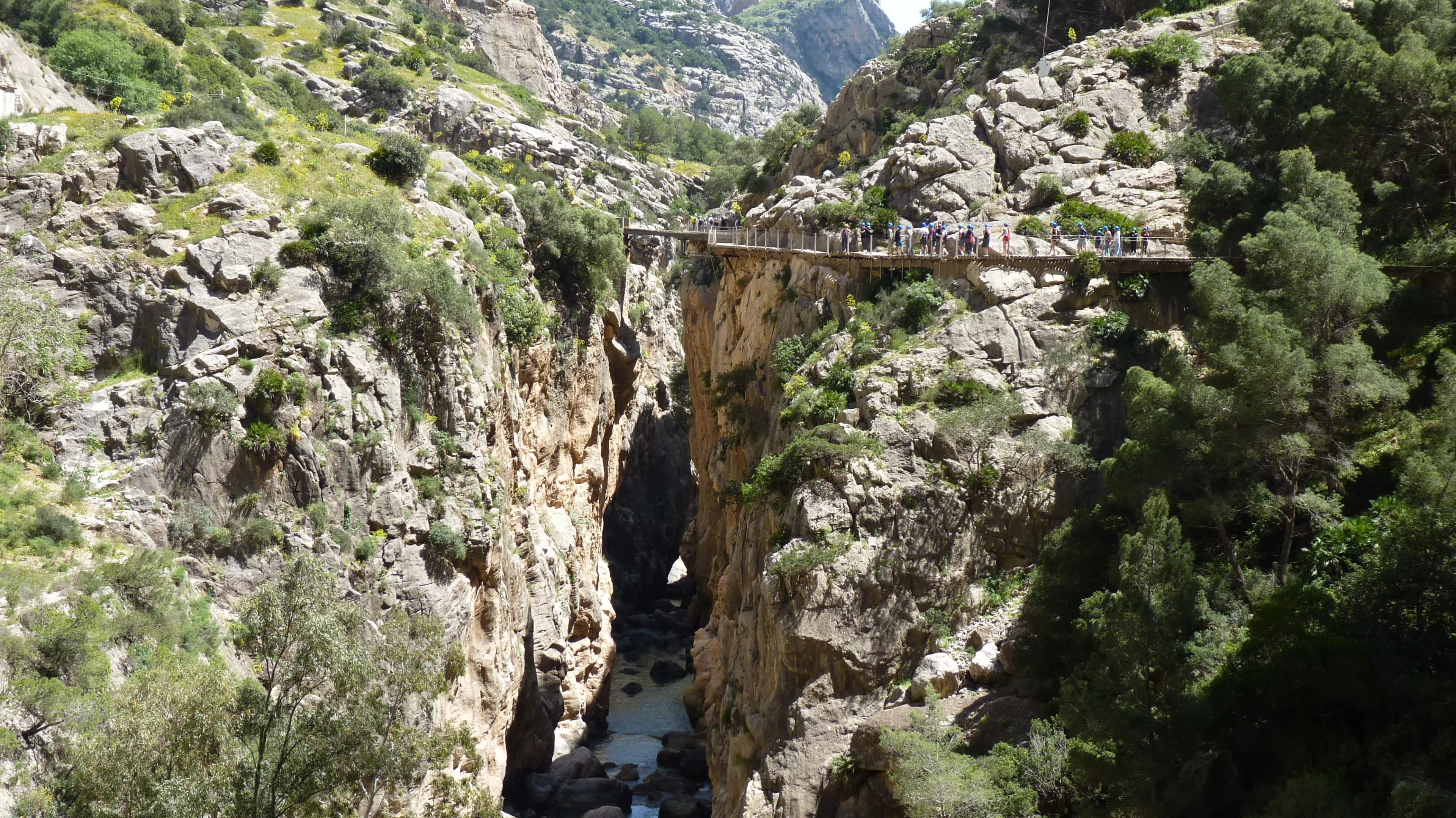
Caminito del Rey
The trail ends at a new bridge that sways in the wind — probably the best part of the walk. After the bridge there are more steps and the path is done. We said goodbye to the guide, returned the equipment, and continued on our own along a much easier, wider path. As we said, this is a circular route; after about ten minutes’ walk you reach the station where we waited for the train back to Malaga.
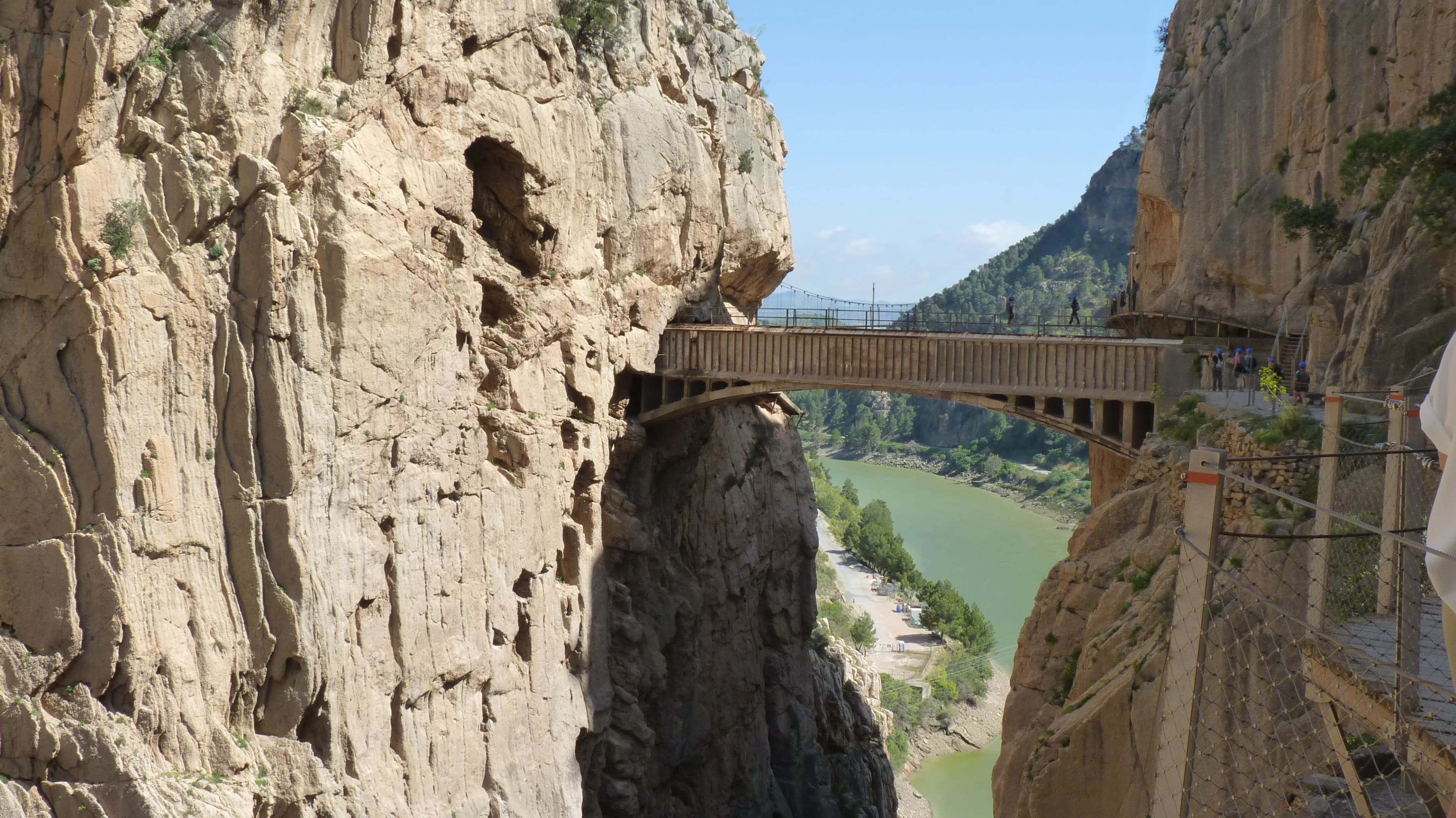
New bridge on Caminito del Rey
This day trip is genuinely memorable and was one of the better experiences of our time in Andalusia. We wrote about our base for this trip in our Malaga travelogue.
Below is a map of key locations related to Caminito del Rey, plus a video compilation from our trip.